
Back to the list

“AI doesn’t fail because it can’t decide, it fails because it decides too easily.”
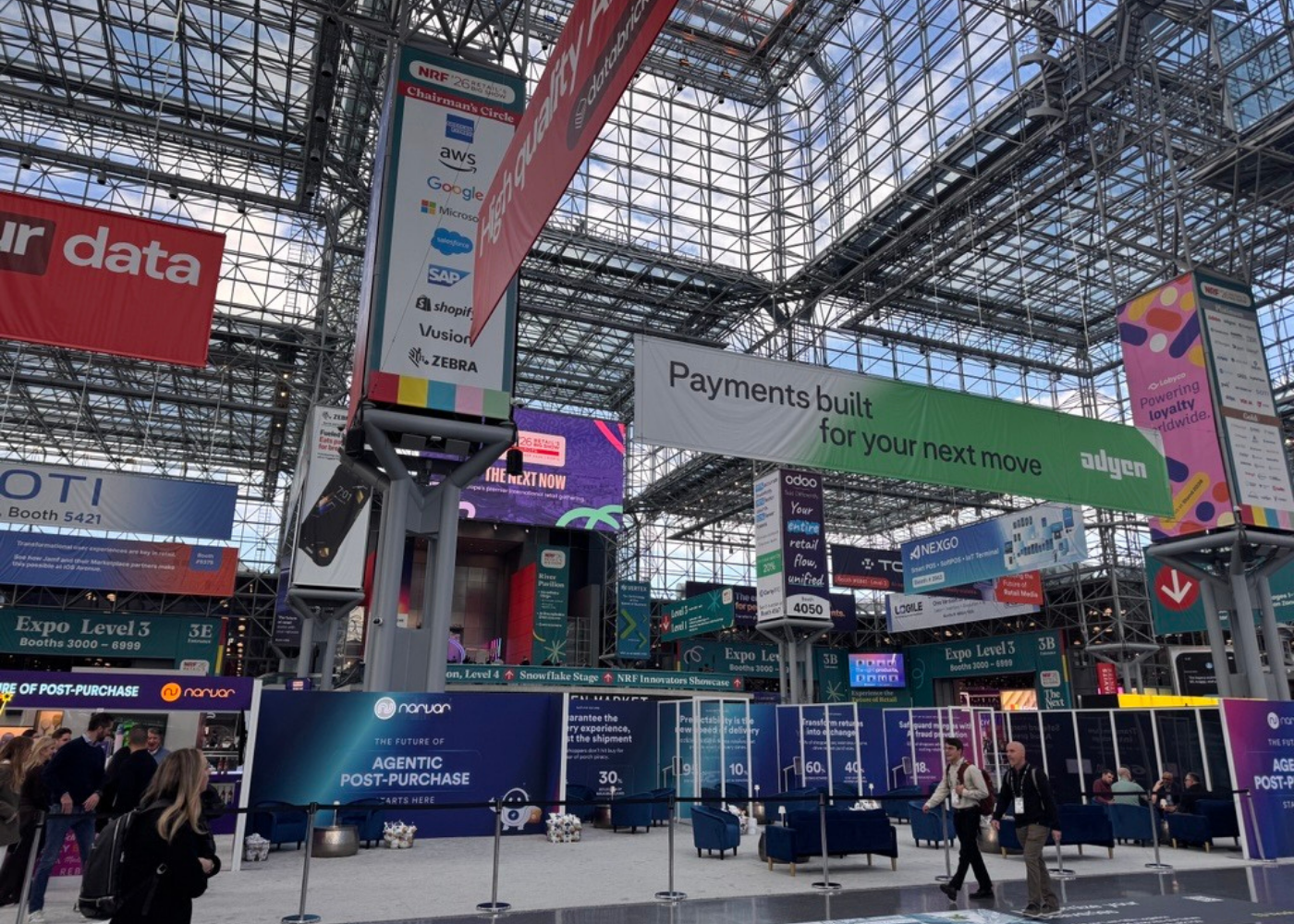
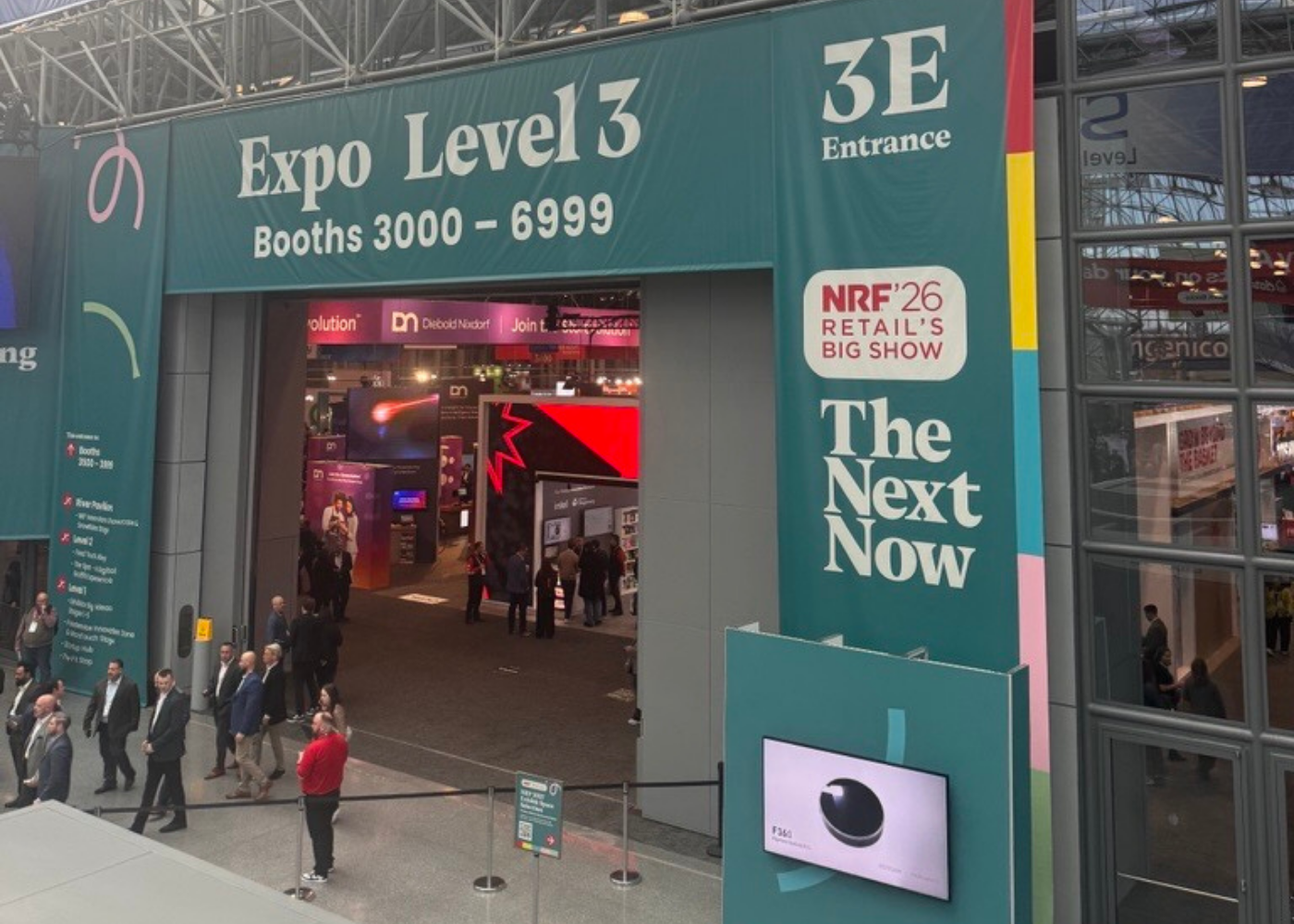
New York City / Berlin, January 14th, 2026 - After NRF 2026, one topic kept resurfacing in conversations across retail, technology, and data, agentic AI. However, SAIZ noticed something more structural beyond the buzzwords.
We sat down with Marita Sanchez de la Cerda, Co-Founder and CEO of SAIZ, to talk about what actually stood out at NRF, what felt real, what felt fragile, and what this shift means for retail organizations, especially in fashion.
What struck me most was not how excited people were about agents, but how cautious the most mature teams were.
The sessions that felt most honest were not about flashy experiences; they were about foundations. URBN, for example, showed very clearly that their “agentic” progress did not start with shopper chatbots, it started with agreeing on definitions, building a semantic layer, and making their data trustworthy enough that AI could even be allowed to touch it.
That felt very grounding.
The message was, AI is not magic, it is extremely sensitive to context. If you don’t have shared definitions, lineage, and trust in your data, you are not building intelligence, you are building a faster way to be wrong.
Yes, and I think that’s healthy.
There is a tendency to imagine agentic commerce as this sudden leap where AI takes over decisions end to end. However, what we saw is that inside real organizations, agentic behavior emerges very slowly and very pragmatically.
It starts with replacing reporting chaos, letting people ask questions in natural language, and speeding up decision cycles. It is about reducing friction for operational teams, not replacing humans.
That’s why one quote from the sessions really stuck with me, “Create the main report, and then let AI lay the riff on it.” That’s a beautiful mental model. AI is augmenting human structures, not replacing them.
Because agents do not hesitate when information is missing. Humans pause. Humans abandon. Humans feel uncertainty. Agents do not. They optimize for completion.
So when an agent encounters an ambiguous concept like “fit,” “size,” or “product quality,” it will still decide. It will still choose a size. It will still complete checkout. And it will do that on a massive scale.
That’s what makes this moment different from traditional e-commerce. In the past, ambiguity created friction. Now ambiguity creates invisible risk.
So if we are moving toward a world where decisions are increasingly made by systems, not people, then the quality, structure, and meaning of the data those systems rely on becomes existential.
That’s why the semantic layer is not just a technical detail, it is the control layer.
What became very clear at NRF is that most agentic strategies focus on models, copilots, assistants, checkout, but the industry still overlooks the most fragile decision point in fashion, fit.
Fit today has no shared, machine-readable truth. It is brand-specific, inconsistent across channels, poorly structured, and deeply human.
So from our perspective, SAIZ is not a feature in the agentic stack. It is part of the infrastructure that makes agentic commerce safe in the first place.
We define what fit actually means. We normalize sizing logic. We connect customer signals to product reality. We make fit explainable, traceable, and consistent.
In the same way enterprises needed a semantic layer to define “revenue” before they could trust analytics, agentic commerce needs a semantic layer to define “fit” before it can be trusted with decisions.
That is why we describe ourselves as the Fit Intelligence Layer. Not a widget. Not a recommender. Infrastructure.
That errors scale faster than ever.
In a human-driven world, bad fit leads to hesitation, returns, complaints. In an agentic world, bad fit leads to silent, confident, automated mistakes.
Agentic commerce does not fail because AI cannot decide. It fails because AI decides too easily.
If brands do not make fit a data problem now, before agents become decision-makers, they risk hardcoding ambiguity into the core of their future commerce stack.
And once that is embedded, it becomes very hard to unwind.
That the real work is not choosing the right model or the right agent.
The real work is agreeing on truth.
What does a metric mean. What does a product attribute mean. What does fit mean. What data do we trust enough to let a system act on our behalf.
That work is slow, unglamorous, and deeply organizational. But it is also the work that separates sustainable transformation from expensive experiments.
NRF this year felt like the moment where that finally became visible.
SAIZ is the Fit Intelligence Layer for apparel brands. It provides the semantic definitions, normalized sizing logic, and explainable fit signals that allow brands and retailers to make fit a data problem, not a UX problem.
By turning fit into trusted, machine-readable infrastructure, SAIZ helps organizations reduce returns, improve margins, and safely enable AI-driven decision-making across product, merchandising, and customer experience.
Press Contact
Hana Shamaa
Marketing Manager, SAIZ
hana.shamaa@saiz.io
https://www.saiz.io/


